

“Artefacts” Joins Space Strategy Fund Project Led by Tohoku University
Supporting Simulation of Lunar Mobile Robot Systems and Contributing to the Development of Core Technologies for Lunar Surface Infrastructure
Press Release
April 27, 2026
Asteria Corporation (Japan)
Asteria Artificial Recognition Technology LLC
Asteria Corporation’s (Head Office: Tokyo, Japan; CEO HIRANO (Pina) Yoichiro; Tokyo Stock Exchange listed, Security Code: 3853, hereinafter “Asteria”) consolidated subsidiary, Asteria Artificial Recognition Technology LLC (Head Office: Tokyo, Japan; CEO Tom Sonoda; hereinafter “Asteria ART”) is pleased to announce that it will participate as a collaborating institution in the “Lunar PIONEER (Pathfinder for In-situ Operations with Novel Electron-Beam Engineering and Robotics)” project led by Tohoku University.
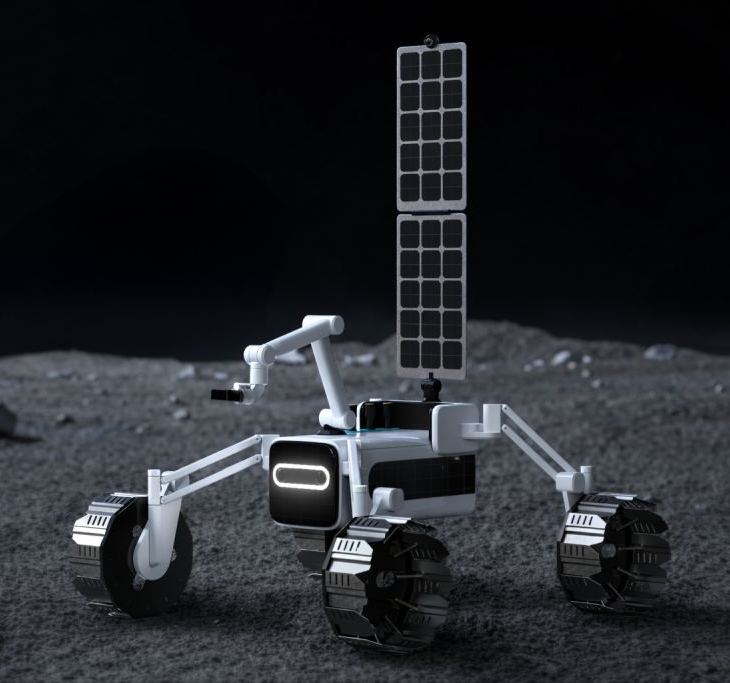
This project aims to develop core technologies for the construction of lunar infrastructure. As part of this effort, Asteria ART will leverage its continuous simulation platform for robotic applications, “Artefacts” to build a simulation environment for lunar mobile robot systems.
Background and Objectives
In recent years, global efforts toward lunar exploration have accelerated, driven by the goal of utilizing the Moon’s abundant resources and establishing a sustainable human presence. Infrastructure development to support landing, mobility, and habitation is essential for future lunar activities; however, one of the most significant challenges is the extremely high cost of transporting materials from Earth.
This project seeks to establish an innovative construction technology that uses electron beams to melt and solidify lunar regolith (the Moon’s surface material), enabling the in-situ formation of infrastructure such as landing pads and roadways. The lunar surface presents a harsh environment characterized by vacuum, extreme temperatures, and low gravity, making validation with physical hardware both time-consuming and costly.
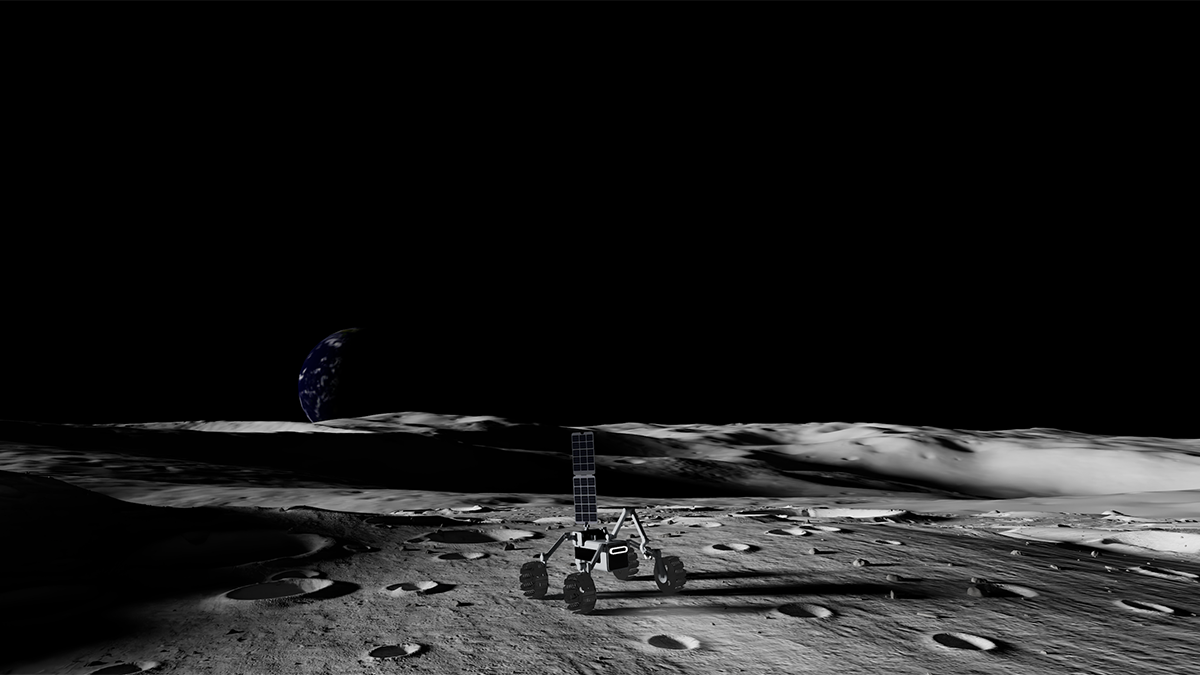
Asteria ART will contribute its expertise through “Artefacts,” a continuous simulation platform for robotic applications that has been refined through extensive domestic and international deployments. Using this platform, the project team will recreate realistic lunar conditions to evaluate robot performance and operational strategies.
This approach enables cost-effective, high-precision execution of approximately 50,000 continuous simulations, supporting efficient development and validation of lunar robotic systems and contributing to the realization of sustainable lunar infrastructure.
Asteria ART and Artefacts’ Roles in the Project
・High-precision simulation
“Artefacts” recreates the lunar environment in a digital space, providing a test and simulation platform for robot operations under lunar-specific conditions. This reduces reliance on physical testing and accelerates the development cycle.
・Continuous testing of lunar rover control software
A centralized system manages the testing of complex control systems installed on lunar robots while continuously conducting emergency response simulations for unexpected situations, such as rollovers or collisions with obstacles. This supports efficient project development and testing to enhance the safety and reliability of lunar operations.
・End-to-end testing of mission operation scenarios
Beyond robot design and testing, “Artefacts” allows for the reproduction and verification of an entire lunar exploration mission’s operational scenario. By combining a wide range of operating conditions, it allows for comprehensive scenario testing prior to launch, thereby significantly improving the success rate of lunar exploration missions.
More Information
・Space Strategy Fund Homepage:
(https://fund.jaxa.jp/)
・Proposal Guidelines for the Space Strategy Fund Program, “Technology Development Themes – Elemental Technologies for Lunar Infrastructure Development”
(https://fund.jaxa.jp/content/uploads/koboyoryo_2_15.pdf) ※Japanese text only.
・Tohoku University News Release:
Kazuya Yoshida (Specially Appointed Professor) has been selected for the “Elemental technologies for lunar surface infrastructure” under the “Space Strategy Fund (2nd Phase)” publicly solicited by JAXA. (Yoshida PJ)
(https://www.niche.tohoku.ac.jp/news/research/20260424553/?lang=en)
About Asteria ART (https://www.artefacts.com)
Asteria ART is a subsidiary of Asteria Corporation which specializes in AI engineering, and the provider of “Artefacts” – a platform that streamlines robot application development through its unique simulation technology. By enabling rapid testing without the need for physical environments and refinement from the early stages of development, “Artefacts” accelerates the development and deployment of advanced robotics systems.
About Asteria Corporation (https://en.asteria.com/)
Asteria is a software development company that provides products and services that “connect” systems, people, things and intentions based on the concept of “Connecting the World with Software”. Its flagship product, “ASTERIA Warp” is middleware which integrates data from different systems and cloud services without coding and has been adopted by over 10,000 companies. Other products include digital storage app “Handbook X”, mobile app builder “Platio” and no-code AI/IoT platform “Gravio”. By offering these products, Asteria promotes digital transformation (DX) and helps organizations improve their business process efficiency. Asteria is also engaged in raising awareness of new technologies and their value and fosters innovation through its involvement in the launch of Blockchain Collaborative Consortium and No Code Promotion Association.
Media Contacts
Asteria Corporation PR and IR Department / TEL: +81-3-5718-1297 / E-mail: press@asteria.com
Product Inquiries
Asteria Corporation AI Connected Business Unit / TEL: +81-3-5718-1297 / E-mail: gravio-jp@asteria.com
Asteria, Gravio, Platio and Handbook are registered trademarks of Asteria Corporation. Other names of companies, products, services and logos are registered or unregistered trademarks of their respective owners.